I’ve come to believe Italy always has an unofficial administrative phase before the official process begins. I call it The Wind Up.
It’s the series of failed attempts required before anyone permits you to accomplish the thing you came to do.
In the Italian bureaucracy, you never simply renew a document. First, you discover the hidden hours posted only on a physical door. Then, you learn about the additional piece of paper nobody mentioned during the previous visit. Then, someone leaves early because of a personal matter. Then, you return with the missing document only to discover you now need another document connected inexplicably to the first.
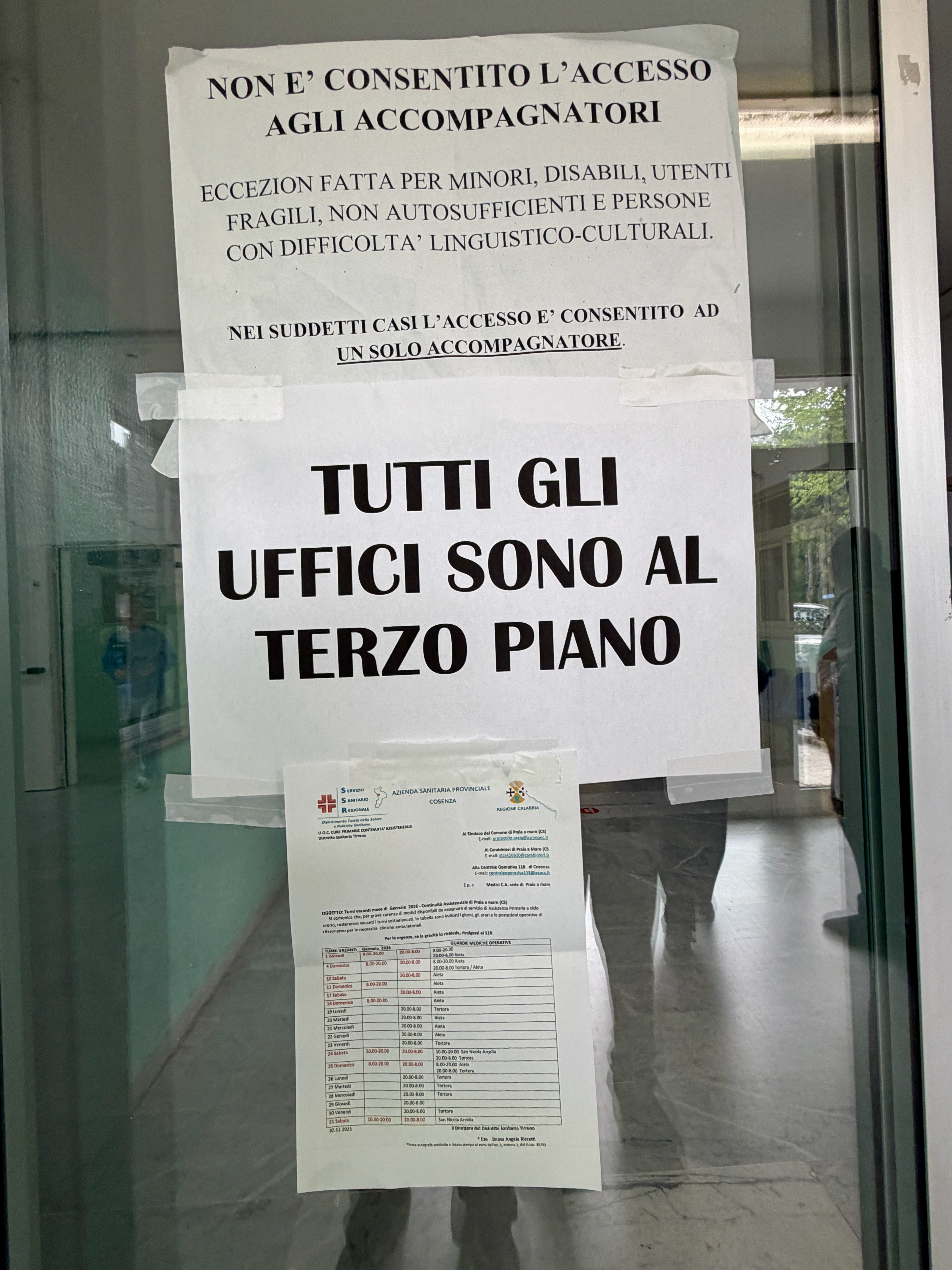
This year, my tessera sanitaria—the Italian health card—expired while I was in Rome. Since I wasn’t in the town where I’m a resident (the only place you can renew it in person), I hired a local helper, a seasoned bureaucrat battler, Nelson, to go to the ASL on my behalf and renew my tessera.
What is the ASL?
It stands for “Azienda Sanitaria Locale,” Italy’s local public health office that handles services like the tessera sanitaria, doctors, and healthcare registration.
Nelson failed repeatedly.
His first visit produced a newly revealed requirement: proof from the Chamber of Commerce that my film production company existed. On his second visit, the woman handling the paperwork left early because of a personal issue.
On the third visit, Nelson did actually succeed in obtaining a temporary renewal for me, but ‘temporary’ was the operative word.
Because my permesso di soggiorno (permission card that allows me to stay in Italy) was nearing expiration, the tessera would remain valid for only three months unless I returned later with the receipt proving my residency renewal was in process. Simple.
Of course, I already had the receipt.
And of course, Nelson did not have it with him.
So three months later—here I was again.
I decided this time I’d try to handle it myself…in Italian.
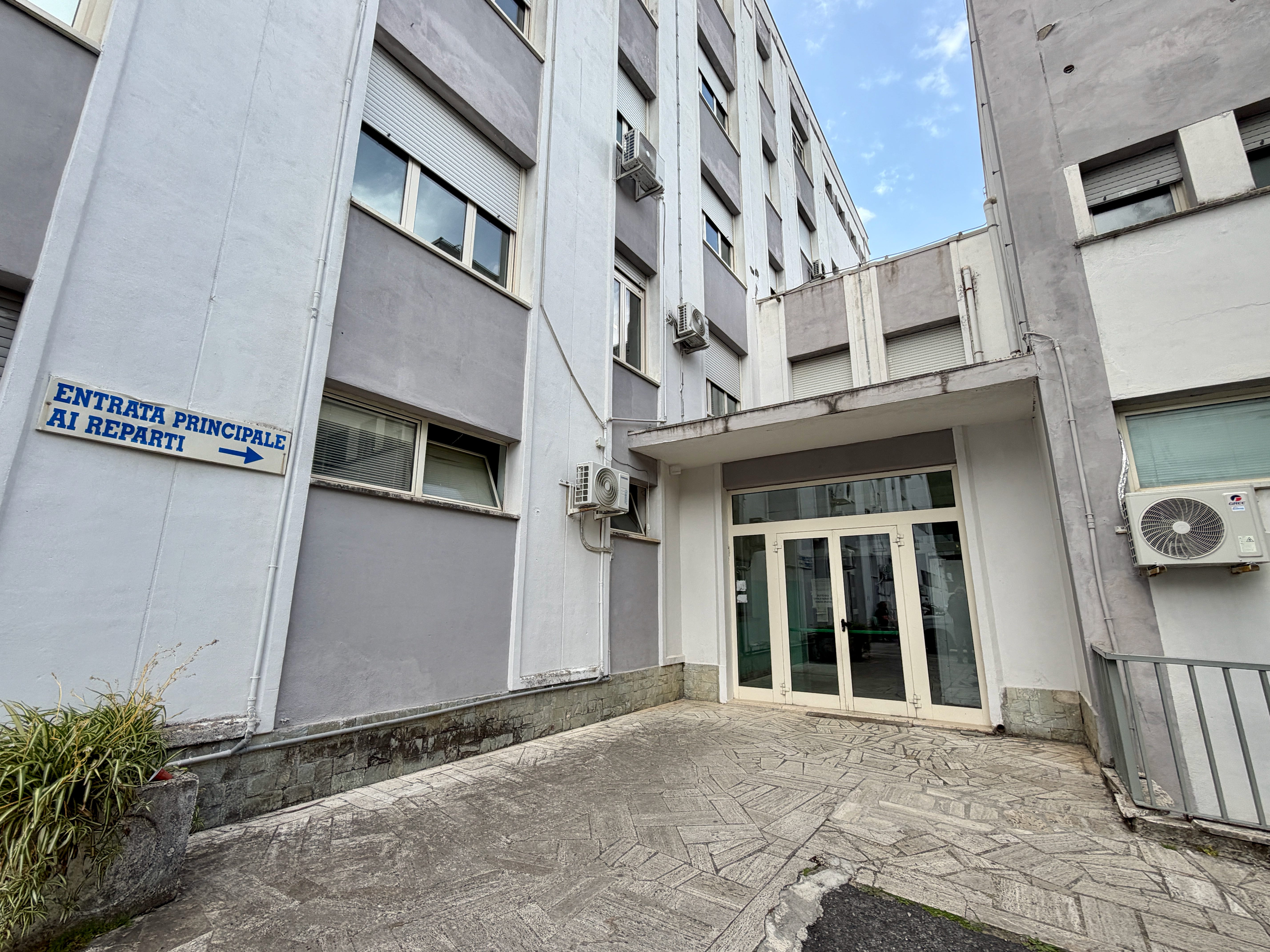
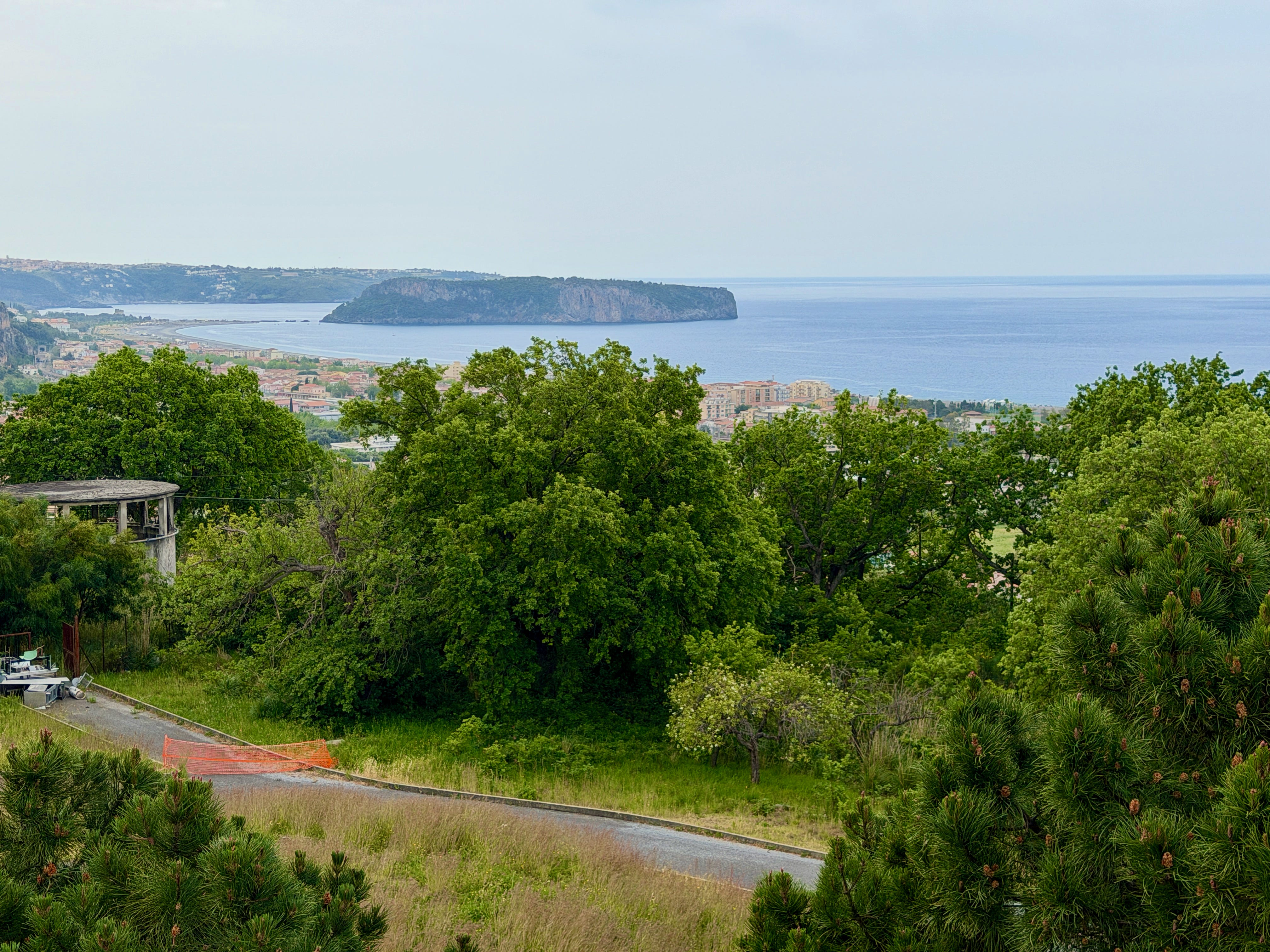
The hospital serving Praia a Mare sits improbably high above the sea at the top of a winding mountain road with spectacular views of Dino Island and the Tyrrhenian coast. It’s hard not to admire a nation capable of placing one of the Mediterranean’s most beautiful vistas adjacent to an office dedicated to tedious health-card extensions.
I arrived at 11 on a Thursday morning. The posted hours were 9 to 1, though by now, I understood Italian office hours to be more theoretical than binding. I was prepared to find a taped, handwritten sign and a locked door, certainly, or an empty office occasioned by some obscure saint’s day unknown to me or in fact, the general public. One of those saints. (There are MANY more Italian saints than days of the year. Some days have dozens of saints.)
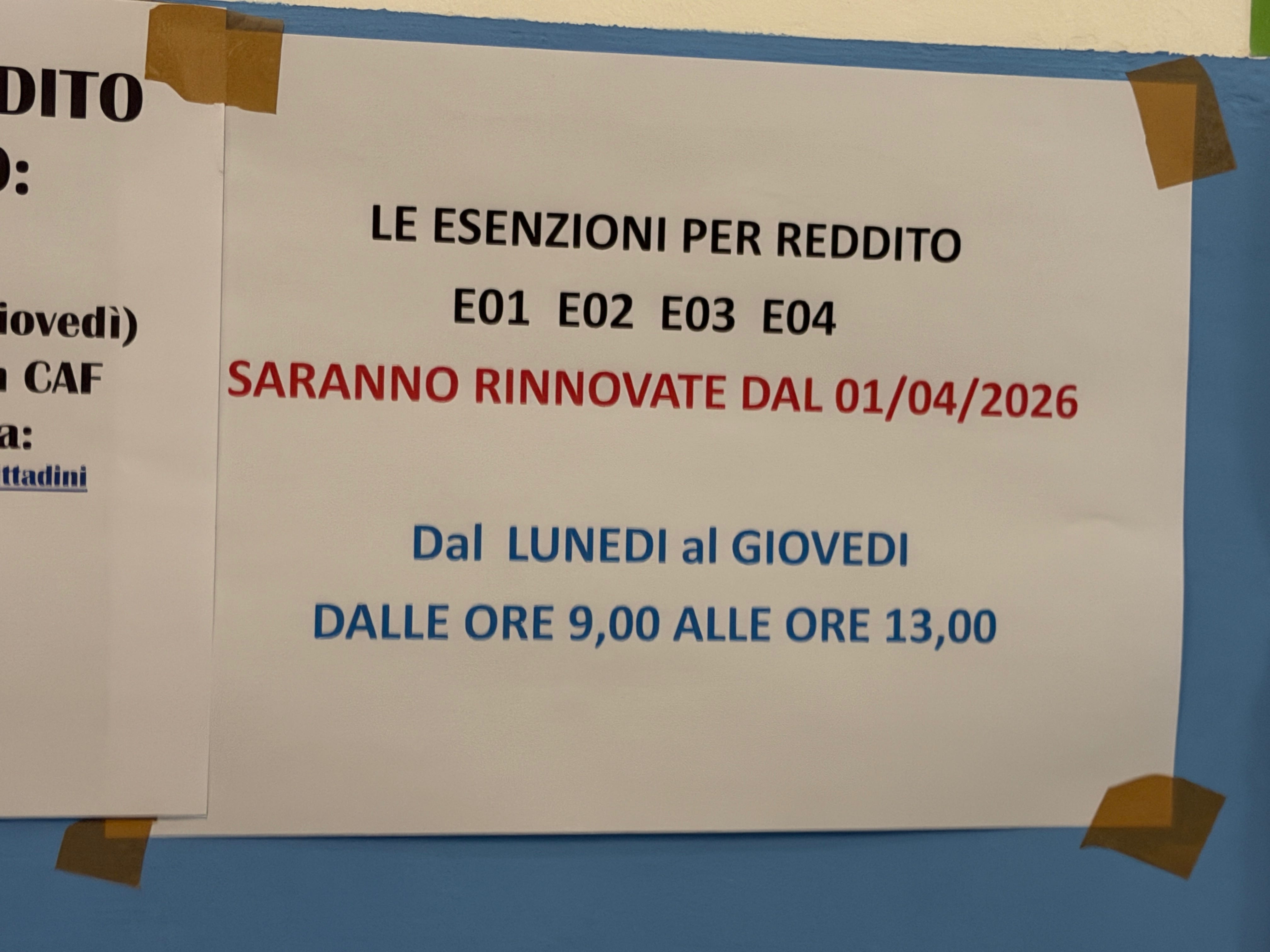
Instead—stunner!—the office was open.
The waiting area was tiny, more an antechamber between hallways and office doors than an actual room. About ten people sat quietly under greenish fluorescent lights. No windows. No television. No ticket machine.
One thing was on real display: grim patience.
In Italy, there’s often no cordoned line at all. The system lives entirely by mental mapping (using one’s powers of ‘order memory’.)
When you arrive, you always politely ask: “Chi è l’ultimo?” (Who’s the last?)
You note the person who raises their hand—you’re after them.
Two guards in immaculate midnight-blue uniforms with braided gold epaulettes stood near the entrance, lending unexpected grandeur to the proceedings.
One approached and asked what I was looking for.
“The ASL,” I said, pronouncing it incorrectly.
He corrected me gently. I still didn’t fully understand him, so I simply spelled it out letter by letter like a child.
“A-S-L.”
“Yes,” he said. “Open Monday through Thursday. Nine to one.”
“Perfect,” I replied. “So it’s open now.”
“No,” he said calmly. “All the numbers are finished.”
All the numbers?
One of the waiting supplicants explained that only 20 numbered ‘tickets’ are given out per day. Twenty people get helped… over a period of four hours.
By now, the room had begun listening to my inquiry with interest. My American accent had transformed my paperwork problem into an entertaining community event.
I asked what I thought was a reasonable question.
“When is the best time to come so there’s less waiting?”
This triggered an amused public consultation.
One resigned man who looked like he’d already spent many hours waiting told me I needed to arrive at 8.
“Though it opens at 9?”
“Yes.”
He shrugged in so purely an Italian manner, it was less body language than cultural inheritance.
The guard looked at me seriously.
“Sette e mezzo è meglio.” ”Seven-thirty is better.”
Of course it is. Why not spend an hour and a half waiting for the office to open?
I gave him an air punch on the arm, trying to make a joke with body language instead of the verbal language I didn’t possess.
I walked out… feeling like the visit had been a total success. Not the official errand, which had failed exactly as expected.
But I’d conducted the entire exchange in Italian. I’d understood the suggestion to arrive ninety minutes early. I’d made the guard smile. We’d all wished each other buona giornata and arrivederci on the way out, in a small chorus. Our goodbyes had real warmth.
I stepped back out into the Calabrian sunlight, understanding that, somewhere along the way, the bureaucracy had stopped feeling like a wall and started feeling like participation.